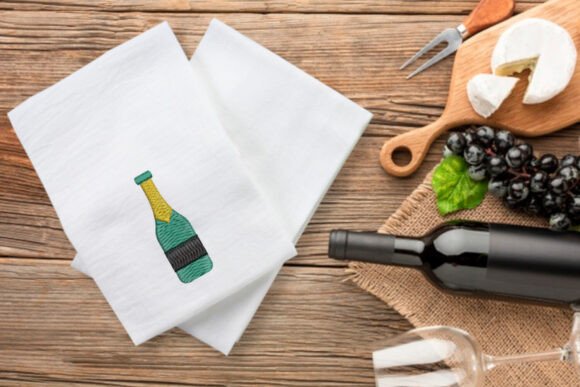
Champagne File Mini Embroidery: A Designer’s Review
As an embroidery designer who has spent years digitizing logos and testing files for commercial production, I approach every new machine embroidery design with a critical eye. It is not just about whether the image looks cute on a screen; it is about how it performs under the needle, how it holds up after washing, and most importantly, how it elevates a brand. Recently, I downloaded the Champagne File Mini Embroidery to evaluate its potential for small business merchandise. This review breaks down the practical application of this digital embroidery file for shop owners, apparel decorators, and handmade brands looking to add a touch of elegance to their product lines.
First Impressions and Visual Personality
The first thing that strikes you about the Champagne File Mini Embroidery is its inherent versatility. While the subject matter—a champagne bottle—immediately suggests celebration, luxury, and hospitality, the execution determines its true value. Based on the description, this design is compact, ranging from 1.5 inches to 3.5 inches. This size range is crucial. It signals that the design is intended for subtle branding rather than large back prints.
Visually, a champagne motif can easily veer into tacky territory if the digitizing is poor. However, when done correctly, it conveys a sense of premium quality. For businesses in the Wine sector, boutique hotels, or upscale bakeries, this design offers a way to communicate sophistication without using words. It feels both modern and classic, making it suitable for a wide array of design assets. The key question for any buyer is whether the lines are clean enough to remain legible at the smallest 1.5-inch size, where stitch density becomes a major factor in clarity.
Real-World Applications for Small Business Merch
For small business owners, the utility of an embroidery file is measured by its adaptability. The Champagne File Mini Embroidery shines in several specific commercial applications. Because it is available in five sizes and eight formats—including DST, PES, and JEF—it is ready for almost any modern embroidery machine. Here is how I envision this design performing in a real-world business scenario:
- Branded Patches: This is perhaps the strongest use case. An embroidered patch featuring this champagne bottle can be sewn onto tote bags, denim jackets, or canvas aprons. Patches allow for inventory flexibility; you can embroider them in batches and apply them as needed.
- Staff Uniforms and Aprons: For cafés, bistros, or event planning companies, apron embroidery adds a professional touch. Placing this mini design on the chest pocket area creates a refined look that customers associate with high-quality service.
- Cap Embroidery: The curved surface of a baseball cap is tricky for detailed designs. However, the 1.5-inch and 2-inch versions of this file are likely small enough to sit cleanly on the front panel of a cap, providing subtle brand identity without overwhelming the wearer.
- Tote Bag Design: Canvas totes are a staple for retail shops. A small, centered champagne logo acts as a minimalist mark of quality, turning a simple bag into a desirable handmade product or customer gift.
Technical Considerations and Stitch Density
While the aesthetic appeal is strong, we must discuss the technical realities of commercial embroidery. The description notes that the file includes formats like VP3 and XXX, which is excellent for compatibility. However, users must pay close attention to stitch density. At 1.5 inches, a champagne bottle shape requires precise digitizing to ensure the outline does not merge into a solid blob of thread. If the density is too high, the fabric may pucker; if it is too low, the design may look sparse and unprofessional.
I strongly advise testing this design on your specific hoop size and fabric type before committing to a large production run. For dark uniforms, you will need to consider thread colors carefully. A gold or metallic thread might look stunning for a champagne theme, but it requires high-quality rayon or polyester threads to maintain sheen without breaking. Always check the spacing between elements. In smaller sizes, intricate details like the foil wrapper on the bottle neck might need simplification to ensure they stitch out cleanly.
Enhancing Brand Identity and Customer Trust
Why choose this specific motif? In the world of small business merch, consistency is key. If your brand revolves around celebration, luxury, or artisanal quality, the Champagne File Mini Embroidery reinforces that narrative. When a customer receives a tote bag or wears a cap with this embroidered logo, it signals attention to detail. It moves the item from being a generic promotional product to a piece of custom apparel that people actually want to keep.
This design also works well for seasonal promotions. Think of New Year’s events, wedding favors, or anniversary sales. Having a ready-to-use digital embroidery file allows you to pivot quickly and produce branded items that feel timely and relevant. It enhances buyer engagement because it feels personal and crafted, rather than mass-produced via screen printing.
Practical Designer Notes for Production
Before you load this file into your machine for a client order, follow these essential steps to ensure a flawless finished product:
- Test in Black and White First: Before using expensive metallic or colored threads, stitch out the design in black thread on white fabric. This helps you see the structure and clarity of the digitizing without the distraction of color.
- Check Stabilizer Compatibility: For stretchy fabrics like jersey caps or thin tote bags, use a cut-away stabilizer to prevent distortion. For woven aprons, a tear-away might suffice, but always test first.
- Verify Commercial Licensing: The description mentions it is a zip file with multiple formats, but always confirm the license terms. Ensure you have the right to use the design for commercial embroidery projects if you are selling the final physical goods.
- Create a Printable Mockup: Use the included sizes to create a printable mockup for client approval. Show them how the 2.5-inch version looks on an apron versus the 1.5-inch version on a hat. Visualizing the scale prevents disappointment later.
- Inspect Thread Contrast: Champagne implies light, bubbly, and bright. Ensure your thread choice contrasts well with the fabric. A pale gold on white linen may disappear, while a deep bronze on navy blue will pop.
Final Verdict
The Champagne File Mini Embroidery is a solid addition to any designer’s library, particularly for those serving the hospitality, retail, or lifestyle sectors. Its strength lies in its compact sizing and format variety, making it accessible for various machines and applications. While it requires careful attention to fabric texture and thread selection to truly shine, its potential for enhancing brand identity is significant. For Etsy sellers and boutique owners looking to add a touch of class to their Embroidery offerings, this design offers a professional foundation that, when executed with care, can elevate your entire product line.